Best Full Leg Compression Systems Under $500 for Recovery
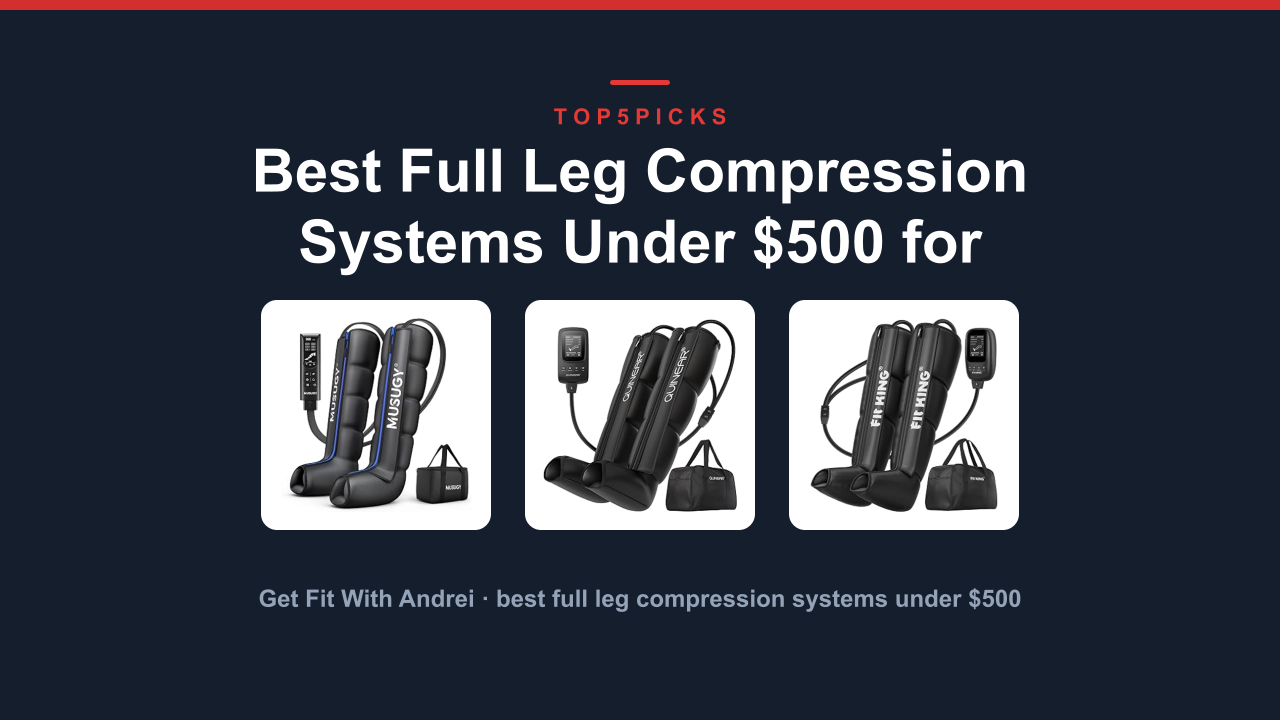
The best full leg compression systems under $500 start with the Sequential Leg Compression Massager Circulation, the pick with the widest control range in this lineup at 9 intensity levels, 6 modes and 3 timers. It suits runners, lifters and anyone who stands on hard floors all day and wants to tune pressure session by session.
Want something built around hard post-workout recovery instead? The QUINEAR Leg Recovery Compression System Athlete covers foot and leg with sequential chambers, as long as you're fine with fewer adjustments and a premium-tier position.
As an Amazon Associate, I earn from qualifying purchases.
This guide also covers the buyers who should skip compression boots entirely, and that part matters more than the rankings if you fall into one of those groups.
One honesty note: everything below comes from manufacturer specs, current Amazon product data and each system's owner track record, not hands-on lab testing by our team.
Quick Answer: The Best Full Leg Compression Systems under $500
The Sequential Leg Compression Massager Circulation leads because nothing else here combines 6 modes, 9 intensity steps and 3 timer options in one full-leg boot.
- Sequential Leg Compression Massager Circulation (Best overall control): 6 modes, 9 intensities and 3 timers in one unit.
- QUINEAR Leg Recovery Compression System Athlete (Best for post-workout days): foot-to-leg sequential coverage aimed squarely at athletes.
- FIT KING Air Compression Recovery System (Best daily mid-range pick): predictable full-leg air compression in a Medium fit.
- FIT KING Air Compression Recovery System (Best for taller legs): the same FIT KING platform sized Large.
- Leg Massager Heat Compression Circulation (Best with heat): the only pick here that adds warmth to compression.
Thinking about a massage gun or a foam roller instead? Jump to Who Should NOT Buy below before you spend anything.
Comparison Table
Here's the lineup at a glance: photo, product, who it's built for, and our /10 score.
| Photo | Product | Best for | Score | Buy |
|---|---|---|---|---|
 | Sequential Leg Compression Massager Circulation | Most settings in the lineup | 9.1/10 | Check price → |
 | QUINEAR Leg Recovery Compression System Athlete | Hard post-workout recovery days | 8.7/10 | Check price → |
 | FIT KING Air Compression Recovery System | Everyday full-leg recovery | 8.4/10 | Check price → |
| FIT KING Air Compression Recovery System | Taller legs and longer frames | 8.2/10 | Check price → |
 | Leg Massager Heat Compression Circulation | Heat plus gentle compression | 8.9/10 | Check price → |
Scroll sideways on small screens to see every column.
Sequential Leg Compression Massager Circulation: Best Overall for Full-Leg Control
QUINEAR Leg Recovery Compression System Athlete: Best for Post-Workout Recovery
FIT KING Air Compression Recovery System: Best Mid-Range Pick for Daily Use
FIT KING Air Compression Recovery System: Best for Taller Legs Large Fit
Leg Massager Heat Compression Circulation: Best With Heat for Circulation
Buying Guide: Coverage, Controls, Fit and Warmth
Four things separate a boot you use weekly from one that ends up in a closet. Get these wrong and no amount of modes will save it.
Does full-leg coverage actually matter?
For most buyers, yes. A full-leg chamber sequence pushes air from foot to thigh in a wave, which is the pattern behind intermittent pneumatic compression (IPC), the clinical term for this kind of therapy. Lower-leg-only sleeves are cheaper and easier to slip on, but they skip the calf-to-thigh transition that heavy squatters and long-distance runners tend to want.
On this list, four units run full leg and one runs lower leg. If your soreness sits mostly below the knee, the Standard fit is plenty.
How many modes and intensity levels do you need?
More than you'd think, but fewer than the spec sheet suggests. Nine intensity levels and six modes, as on the Sequential Leg Compression Massager Circulation, means you can run a soft, slow wave one night and a firmer routine after a long ride the next. Three intensity steps often isn't enough to find a comfortable setting.
That said, plenty of owners settle into two or three favourites within a month. If you know you'll do exactly one routine, a simpler machine like the FIT KING Air Compression Recovery System is the more honest buy.
Why is sizing the biggest reason these get returned?
A compression boot only works when the chambers press evenly against your leg. Too loose and you feel nothing but air movement, too tight and the top edge digs in after 15 minutes. Tall buyers in particular hit trouble, which is why there's a Large version of the FIT KING Air Compression Recovery System alongside the Medium.
Measure thigh and calf circumference with a soft tape, then compare against the listing before you buy. It's a two-minute job that saves a return.
Is heat worth paying for?
Heat helps if your legs feel cold and stiff rather than muscularly wrecked. Warmth relaxes tissue and adds comfort, which is why the Leg Massager Heat Compression Circulation exists as a distinct option. For post-training soreness, most athletes rate pressure quality higher than warmth, so heat is a bonus rather than a requirement.
If you're rebuilding a home recovery setup, it pairs well with the kind of basic strength gear you'd keep nearby for leg days.
Who Should NOT Buy Best Full Leg Compression Systems under $500
Compression boots are the wrong purchase for a few kinds of buyers, and it's better to know now. Here's who they are and what to look at instead.
You Need a Diagnosis, Not a Massager
These devices are comfort and recovery tools, not medical treatment. If you have swelling in one leg only, a history of deep vein thrombosis, active wounds, or a diagnosed circulatory condition, talk to a clinician before buying any pneumatic device. People with uncontrolled heart failure or recent surgery should also get clearance first.
For general circulation information, the National Heart, Lung, and Blood Institute publishes plain-language resources on blood flow and vein health. Use that, not a product listing, as your starting point.
You Want Deep-Tissue Pressure
Compression boots push air, they don't dig in. If your tightness lives in one specific knot, a massage gun or a firm foam roller reaches it far better. Boots work across an entire limb, which is different from targeting a single trigger point.
You Won't Actually Use Them Daily
These only earn their space if they get used. If you can't picture yourself on the couch for 15 to 20 minutes most evenings, put the money somewhere else, like a better pair of training shoes or a workout problem fix for whatever's actually hurting.
Final Verdict
The best full leg compression systems under $500 is the Sequential Leg Compression Massager Circulation. It wins on adjustment range: 9 intensity levels, 6 modes and 3 timers is the widest spread in this lineup, and it's a genuine full-leg boot.
Want a recovery-first design? The QUINEAR Leg Recovery Compression System Athlete covers foot through leg and is built around the post-workout window.
Need a big fit? The Large FIT KING solves the thigh-seam problem that Medium boots create for taller riders. Want warmth in the mix?
Grab the heat-and-compression sleeve.
Before you order anything, read the Who Should NOT Buy section above. If you need a diagnosis or you want deep-tissue pressure, this category isn't your answer, and no review score changes that. You can also read more about how we work if you want to know how these picks get built.
FAQ
What's the best full leg compression systems under $500 overall?
The Sequential Leg Compression Massager Circulation. It gives you 6 modes, 9 intensity levels and 3 timers over a full-leg boot, and buyers rate it 4.6 out of 5. That mix of adjustability and coverage is what puts it ahead.
How often should you use leg compression boots?
Most owners run one 15 to 20 minute session after training or at the end of the day. Daily use is common among runners and gym regulars, while occasional users tend to do it a few evenings a week.
Do compression boots replace stretching or foam rolling?
No. They work on a different layer. Compression moves fluid and relaxes the whole limb, while stretching and rolling target specific tight spots.
Many people do both.
Is heat worth the extra cost?
It depends on how your legs feel. Cold, stiff legs often respond well to heat plus compression, which is what the Leg Massager Heat Compression Circulation offers. Muscular post-workout soreness tends to be better served by pressure quality.
What size compression boots should I buy?
Measure calf and thigh circumference, then match the listing. Medium suits most adults, Large is for taller or heavily muscled legs like the Large FIT KING, and Standard fits lower-leg-only designs. A loose boot feels like nothing.
Can anyone use leg compression boots?
Most healthy adults can. Skip them if you have a diagnosed circulatory condition, one-sided swelling, recent surgery or open wounds on the leg without checking with a clinician first.

Similar Posts