Best Travel Recovery Kits With Massage & Mobility Tools
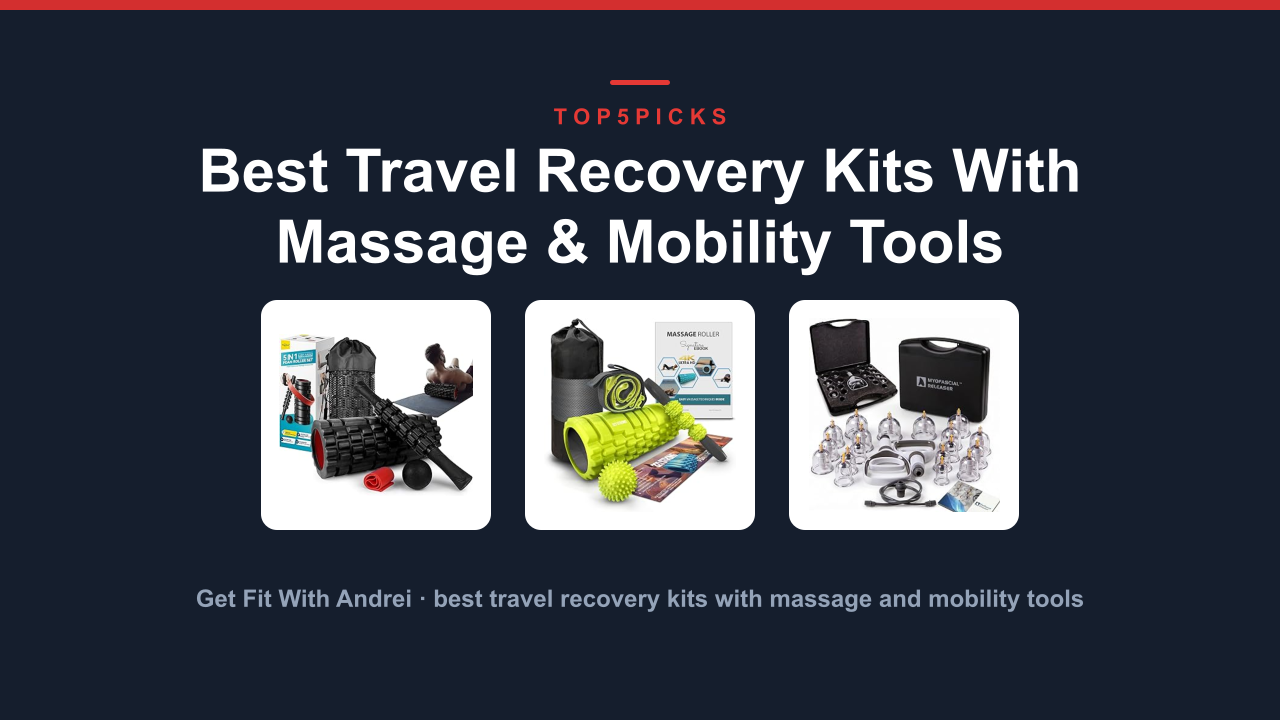
The best best travel recovery kits with massage and mobility tools pick for most people is the Krightlink 5-in-1 Foam Roller High Density set. It's the only kit here that pairs a firm roller with four targeted pieces, so you get broad myofascial release and spot treatment without packing two separate products.
Want something gentler to start with? The 321 STRONG 5-in-1 Massage kit uses medium-density foam that's far easier on a first week of rolling, as long as you accept it softens sooner under heavy bodyweight.
As an Amazon Associate, I earn from qualifying purchases.
Below you'll find scores, real owner patterns and the trade-offs that only show up after a few months of use. If you're expecting percussive therapy or clinical treatment, this category isn't for you, and there's a full section on that further down.
Everything here comes from current Amazon product data, manufacturer specifications and each product's owner track record. We haven't lab-tested these tools, and how we handle links is spelled out if you want the details.
Quick Answer: The Best Travel Recovery Kits with Massage and Mobility Tools
The Krightlink 5-in-1 Foam Roller High Density takes the top spot because it covers whole-body rolling and pinpoint work in a single compact set.
- Krightlink 5-in-1 Foam Roller High Density (Best overall for home and travel): Firm roller plus four tools that hold their shape.
- 321 STRONG 5-in-1 Massage (Best soft-density starter kit): Medium foam that beginners actually finish a session on.
- Myofascial Releaser Cupping Massager (Best suction tool for tight shoulders): Negative pressure instead of downward force.
- RAD Point Release Kit / 5-in-1 (Best for hips, glutes and feet): Block, balls and peanut roller for stubborn spots.
- RAD Baller Bundle Myofascial Release Balls (Best compact kit for frequent flyers): Six pieces that vanish into a backpack pocket.
Thinking about percussive tools or clinical treatment instead? Jump to Who Should NOT Buy below before you spend anything.
Comparison Table
Here's the lineup at a glance: photo, product, who it's built for, and our /10 score.
| Photo | Product | Best for | Score | Buy |
|---|---|---|---|---|
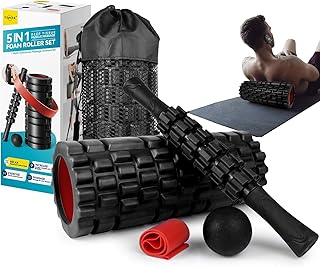 | Krightlink 5-in-1 Foam Roller High Density | Best Overall Kit | 9.1/10 | Check price → |
 | 321 STRONG 5-in-1 Massage | Softer Everyday Rolling | 8.9/10 | Check price → |
 | Myofascial Releaser Cupping Massager | Suction-Based Release | 8.4/10 | Check price → |
 | RAD Point Release Kit / 5-in-1 | Pinpoint Hip and Glute Work | 8.7/10 | Check price → |
 | RAD Baller Bundle Myofascial Release Balls | Carry-On Travel Recovery | 8.6/10 | Check price → |
Scroll sideways on small screens to see every column.
Krightlink 5-in-1 Foam Roller High Density: Best Overall for Home and Travel
321 STRONG 5-in-1 Massage: Best Soft-Density Starter Kit
Myofascial Releaser Cupping Massager: Best Suction Tool for Tight Shoulders
RAD Point Release Kit / 5-in-1: Best for Hips, Glutes and Feet
RAD Baller Bundle Myofascial Release Balls: Best Compact Kit for Frequent Flyers
Buying Guide: Density, Tool Type, Portability and Pressure
Here's the short version: pick your foam density by how much you can tolerate, then match the tool to the body part that's actually bothering you.
How Does Foam Density Change What the Kit Can Do?
Density is the single biggest factor in whether you'll keep using the thing past week two. These picks span medium-density foam on the 321 STRONG kit through to high-density foam on the Krightlink set, and the difference shows up on day one, not month three.
High-density foam resists compression, so the pressure goes into your tissue instead of flattening the roller. That's useful for quads, calves and lats. Medium-density foam gives more, which is why beginners finish sessions on it.
A common mistake is buying the firmest roller as a first purchase and then abandoning it because every session hurt.
Which Tool Type Suits Which Body Part?
Different tools reach different territory, and no single piece covers everything. A roller handles large surfaces. A ball reaches the glute and piriformis, where a roller can't follow the shape.
A peanut roller straddles the spine. Cupping lifts tissue rather than pressing it down.
If your issue sits in the shoulders and upper back, a suction set like the suction cupping kit does something a roller simply can't. If your issue is hip and glute tightness, the ball and block combination is the more direct answer.
The principle is the same as any strength accessory you'd buy: match the tool to the job, not the other way round. That logic applies just as much to picking weights for a small space as it does to recovery gear.
How Portable Do You Actually Need It To Be?
Portability is where most kits quietly fail. A full-length roller is roughly 90 cm long and won't fit in a carry-on. The Krightlink set gets around that with five shorter pieces.
The Baller Bundle goes further and drops the roller entirely.
If you travel monthly, weight and bulk matter more than maximum surface area. If your kit lives in one room, buy the firmest, largest option you'll actually use and stop worrying about the bag.
How Much Pressure Can You Realistically Handle?
More pressure isn't better. Suction tools and firm balls can leave you sore for a couple of days, and that soreness isn't a sign it worked. Start lighter than feels impressive.
There's a useful parallel here with common training setbacks: the people who progress are the ones who dose the stimulus and recover, not the ones who go hardest on day one. Recovery tools work the same way. Two minutes of sensible rolling beats twenty minutes of gritting your teeth.
On the evidence side, there's a practical warning worth noting. According to the National Center for Complementary and Integrative Health (NCCIH), cupping can cause bruising and soreness, and the research base for many of its claimed benefits is still limited. That's not a reason to avoid it, but it is a reason to go gently.
You can read their guidance at nccih.nih.gov.
Who Should NOT Buy Best Travel Recovery Kits with Massage and Mobility Tools
This category is the wrong purchase for three kinds of buyers. Here's who they are, and what to look at instead.
You Need Percussive Therapy
If you're picturing a vibrating gun with interchangeable heads and adjustable speed, none of these five will satisfy that. Rolling and cupping are passive tools, meaning you supply the pressure with your own bodyweight or hand.
A percussion massager is a different device with a motor, a battery and a charger. It costs more, weighs more, and it's a genuinely different purchase. Don't buy a foam roller hoping it'll feel like a massage gun, because it won't.
You Have an Injury, Not Tightness
General muscle tightness from training or sitting responds well to self-myofascial release. Sharp pain, swelling, numbness, a joint that gives way or pain that wakes you at night does not. That's a clinical problem.
In that case, see a physiotherapist or physician before spending money on recovery gear. A tool that feels good on a tight calf can make an undiagnosed issue worse. Our plain-language note on limitations covers how we think about this kind of advice.
You Won't Actually Use It
This is the honest one. Recovery tools only work if you use them consistently, and buyer reviews are full of people who rolled twice and parked the kit in a cupboard. If you don't already stretch or do mobility work, no purchase fixes that.
What helps is starting with the smallest commitment. A single ball set is easier to pick up for two minutes than a five-piece kit that needs floor space and setup. If that sounds like you, the compact ball option is a safer first buy than the full kit.
Final Verdict
The Krightlink 5-in-1 Foam Roller High Density wins because it's the only set here that does broad rolling and spot work from one purchase. Firm foam, five pieces, and a 4.4 out of 5 track record across a big review base.
Want a gentler start? Get the 321 STRONG 5-in-1 Massage. Medium-density foam means you'll finish sessions instead of quitting on them, and it holds the strongest long-run rating in this lineup.
Need something for locked-up shoulders that rolling won't touch? The Myofascial Releaser Cupping Massager works from the opposite direction. Just accept the marks.
Travelling most weeks? The RAD Baller Bundle fits where no roller ever will.
Before you buy anything, read the Who Should NOT Buy section above. If you're chasing percussion therapy or dealing with an injury rather than ordinary tightness, none of these five is the right answer.
FAQ
What's the best Travel Recovery Kits with Massage and Mobility Tools overall?
The Krightlink 5-in-1 Foam Roller High Density set. It's the only kit in this lineup that combines high-density foam rolling with four extra tools, so you get both broad and targeted work without buying twice.
Are these worth it for someone who sits at a desk all day?
Yes, likely more than for a serious athlete. Desk work tends to tighten hips, chest and upper traps, and that's exactly what rolling and ball work address. Just start with medium-density foam and two minutes per area.
How often should I use a recovery kit?
Most owners report using theirs three to five times a week for short sessions rather than one long one. Consistency matters more than duration. If you're new to it, start with two or three sessions and see how your body responds.
Do cupping sets actually do anything?
The evidence base is mixed and limited, but plenty of buyers report reduced tightness in the shoulders and back. NCCIH notes cupping can cause bruising and soreness, so treat it as a comfort tool rather than a treatment, and start on the lowest suction.
Can I pack a foam roller in a carry-on?
A full-length roller, no. Those run around 90 cm and won't fit. This is why the Krightlink set and the RAD Baller Bundle exist.
Both break recovery down into pieces small enough for a backpack.
Which one should I buy if I can only get one?
Go with the Krightlink set for the widest coverage, or the RAD Baller Bundle if you travel constantly and want zero bulk. If you've never rolled before, the 321 STRONG kit is the gentler entry point, and you can always add a firmer roller later.
Questions about how we source and review products, or anything else, are welcome through our contact page.

Similar Posts