Best Compression Recovery Systems with Adjustable Pressure
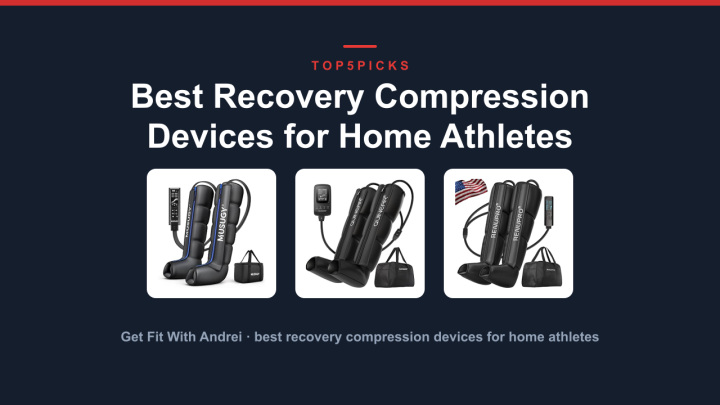
The best best compression recovery systems with adjustable pressure for most people is the Sequential Leg Compression Massager Circulation. It pairs 9 intensity levels with 6 modes and 3 timers, so you can go firm after a long run and gentle on a desk-bound evening.
Want to spend FSA or HSA money instead? The QUINEAR Air Compression Recovery System is FSA and HSA eligible, as long as a wall-tethered pump and a roomier Large boot cut suit you.
As an Amazon Associate, I earn from qualifying purchases.
Below you'll find what the listings bury: what intensity numbers really mean, how to size boots so they don't pinch, and who should skip air compression completely. That last group gets its own section.
Everything here comes from current Amazon product data, published specs and each model's owner track record. We haven't strapped these boots onto our own legs, and we won't pretend otherwise.
Quick Answer: The Best Compression Recovery Systems with Adjustable Pressure
The Sequential Leg Compression Massager Circulation takes the top spot because it gives you the finest pressure control here, 9 levels across 6 modes, with 3 timer options to stop sessions running long.
- Sequential Leg Compression Massager Circulation (Best Overall): Most granular pressure control with 9 levels and 6 modes.
- QUINEAR Air Compression Recovery System (Best FSA/HSA Pick): Covers foot and leg, and eligible for FSA or HSA funds.
- FIT KING Air Compression Recovery System (Best Simple Setup): No heat, no extras, just full-leg air compression that works.
- Medisana Leg Massager Heat (Best With Heat): Adds warmth for cold evenings and stiff calves.
- Anaconda Wireless Leg Compression Boots (Best Wireless): 4-hour battery and 4 sequential zones with no cord tether.
Thinking about a medical device or a percussion gun instead? Jump to Who Should NOT Buy below before you spend anything.
Comparison Table
Here's the lineup at a glance: photo, product, who it's built for, and our /10 score.
| Photo | Product | Best for | Score | Buy |
|---|---|---|---|---|
 | Sequential Leg Compression Massager Circulation | Adjustable Pressure All-Rounder | 9.1/10 | Check price → |
 | QUINEAR Air Compression Recovery System | FSA/HSA Foot and Leg Recovery | 8.7/10 | Check price → |
 | FIT KING Air Compression Recovery System | Straightforward Home Leg Recovery | 8.4/10 | Check price → |
 | Medisana Leg Massager Heat | Heat Plus Compression Comfort | 7.8/10 | Check price → |
 | Anaconda Wireless Leg Compression Boots | Cord-Free Portable Recovery | 8.9/10 | Check price → |
Scroll sideways on small screens to see every column.
Sequential Leg Compression Massager Circulation:
QUINEAR Air Compression Recovery System:
FIT KING Air Compression Recovery System: Best Simple Full-Leg Setup
Medisana Leg Massager Heat: Best Warmth Plus Compression
Anaconda Wireless Leg Compression Boots: Best Cord-Free Recovery
Buying Guide: Pressure Range, Boot Fit, Power and Value Tier
Four things decide whether a compression system ends up as a daily habit or a dust collector in the spare room. The team behind this site compared how each factor plays out across these five picks, and the honest answer is that no single unit wins all four.
How much pressure adjustability do you actually need?
Adjustability matters more than raw peak power, and it matters most in the first two weeks. A system with 9 intensity levels lets a nervous beginner start at level 2 and work upward, while a 3-level unit jumps hard between settings. These five picks span 3 intensity levels up to 9, so the ladder is real.
For context, air compression is a mechanical pressure treatment. The clinical versions used in hospitals work at calibrated pressures in millimetres of mercury, which is a different world from a home recovery boot. The U.S.
Food and Drug Administration classifies true compression therapy devices separately from consumer massagers, and you can read how that line is drawn over at the FDA website. If you need treatment, you need a clinician, not a listing page.
For everyday soreness though, more steps equals better comfort. Six modes across nine levels, as on the Sequential unit, gives you roughly 54 mode-and-pressure combinations to choose from. Three modes at three levels gives you nine, which is plenty for plenty of people.
Does boot sizing or coverage matter more?
Coverage decides which part of the leg gets help, and sizing decides whether you will actually tolerate wearing the thing. A full-leg boot reaches the thigh, which is what you want after heavy leg training. A lower-leg sleeve is smaller, lighter and quicker to put on, which is what you want on a work night.
Here is the practical trade-off. Full-leg boots on this list come in Medium, and Medium fits a genuinely narrow band of body types. Measure your thigh circumference at the widest point before ordering.
If you are between sizes, size up, because air bladders need a little slack to inflate against your leg rather than bite into it.
Owners who train at home and work on kitting out the spare room tend to prefer full-leg coverage, since heavy squats and deadlifts hit the whole leg. If your fatigue is mostly calf and ankle, a lower-leg sleeve like the Medisana will do the job in a fraction of the storage space.
Corded pump or built-in battery: which fits your routine?
A wall-powered pump never runs out, and the battery version never tethers you. That is the whole argument in two lines, and it is worth being honest about the rest.
Battery units typically run for an advertised 4 hours per charge. Sessions commonly run 15 to 30 minutes, so that is roughly 8 to 16 sessions before you plug in. Owners report forgetting to charge and losing half a session, which is the single most common complaint about cordless boots.
Corded units never have that problem, but they lock you to one chair in one room.
There is a second angle: use case. If your recovery routine happens on a sofa in front of a screen, corded is fine and often better value. If you want boots at a gym, at a track or in a hotel room, cordless is the version you will genuinely use.
Our own take on post-training niggles is that the best recovery tool is always the one that is easiest to reach for, not the most powerful one.
What value tier should you be shopping in?
These five sit across the budget-friendly and mid-range tiers, and you can group them fast. Simple corded full-leg compression sits at the value end. Heat, cordless batteries and higher pressure counts push you into the premium tier.
FSA and HSA eligibility is its own category entirely, since it can change your real out-of-pocket number more than a discount does.
The single spec most worth paying extra for is adjustability. Everything else, including heat and battery, is a lifestyle preference rather than a performance gain. A 9-level unit at a mid-tier price will serve most buyers better than a 3-level unit with extras.
To see how these factors play out on real picks, compare the Sequential Leg Compression Massager Circulation, QUINEAR Air Compression Recovery System and the FIT KING Air Compression Recovery System reviewed above.
Who Should NOT Buy Best Compression Recovery Systems with Adjustable Pressure
This category is the wrong purchase for three kinds of buyers. Here is who they are, and what to look at instead.
You Need Treatment for a Diagnosed Circulation Condition
Home compression boots are not medical devices, and no listing on Amazon changes that. If you have been diagnosed with a circulatory disorder, a blood clot risk, lymphoedema, or you are managing a post-surgical recovery, a consumer massager is the wrong tool entirely.
Compression at clinical pressures is prescribed and fitted by a clinician, often with calibrated pressure in millimetres of mercury and a specific garment class. A consumer boot cannot be tuned that precisely and is not fitted to your limb. Talk to your doctor first, and treat this entire category as off-limits until they say otherwise.
You can read our own full disclaimer on where that line sits.
You Want Deep Tissue Knot Release
Air compression moves fluid and works a broad area. It does not dig into a specific knot the way a therapist's thumb or a targeted tool does.
If your problem is one stubborn spot in a calf or a quad, a percussion massager or a foam roller is the better spend. Compression boots help most with diffuse heaviness, swelling and that lead-legged feeling after volume. Buy a boot for the whole-leg flush, not for pinpoint work.
You Want Something You Can Wear While Walking or Working
Every one of these systems requires you to sit or lie down for 15 to 30 minutes with your legs in an inflating sleeve. There is no version you can wear around the house while doing chores.
If your day has no sitting window in it, you will not use this. Look at compression socks or sleeves instead, which you can wear while standing and moving. They apply a much milder, constant pressure, which is a different job done at a different time.
If you want to raise a question about which route suits you, you can send us a note any time.
Final Verdict
The Sequential Leg Compression Massager Circulation earns the top spot because it gives you the most control over pressure with 9 intensity levels, 6 modes and 3 timers, and its 4.6 out of 5 rating is the highest in this group.
Want a cord-free routine instead? The Anaconda Wireless Leg Compression Boots run for 4 hours on battery and split pressure across 4 sequential zones, as long as you accept the charging habit.
Need to spend FSA or HSA funds? The QUINEAR system is the eligible pick, and it covers feet as well as legs. Want warmth in the mix?
The Medisana Leg Massager Heat is the only one here with heat.
And if you simply want air compression that plugs in and works, the FIT KING boots do exactly that. Just check the Who Should NOT Buy section above first if you have a diagnosed condition. No boot on this page replaces medical care.
FAQ
What's the best Compression Recovery Systems with Adjustable Pressure overall?
The Sequential Leg Compression Massager Circulation. Its 9 intensity levels, 6 modes and 3 timer settings give you the finest pressure control in this lineup, and it carries the highest owner rating of the five at 4.6 out of 5.
Are compression boots worth it for runners and gym-goers?
For diffuse heaviness, swelling and that lead-legged feeling after high volume, owners report they help. They will not fix a specific knot, a strain or an injury, and they are not a medical treatment. Think of them as a comfort and circulation tool, not rehab equipment.
Can I claim a leg compression system through FSA or HSA?
Some systems are explicitly listed as FSA and HSA eligible, and the QUINEAR in this lineup is one of them. Eligibility rules sit with the IRS and your plan administrator, so confirm with yours before you buy. Keep the receipt either way.
How long should a compression session last?
Most owners land between 15 and 30 minutes, which is why the timer settings on the Sequential unit matter. Start shorter and lower, at around 10 to 15 minutes on the lowest pressure you find useful, then build up over the first week. Longer is not automatically better.
How do I pick the right boot size?
Measure your thigh circumference at the widest point and compare it with the size chart on the listing before you order. If you land between two sizes, go up. A boot that is too tight pinches at the top of each inflation cycle, and that is the fastest way to stop using it.
Do wireless compression boots work as well as corded ones?
Pressure performance is broadly comparable at this price level. The real differences are convenience and upkeep, since a cordless pair frees you from the socket but adds a charging routine. Corded units like the FIT KING system never need charging at all.

Similar Posts