Best Recovery Compression Devices for Home Athletes
The best best recovery compression devices for home athletes pick is the Sequential Leg Compression Massager Circulation, the only boot here that pairs 9 intensity levels with 6 modes and 3 timers in one Medium-sized sleeve. If you train legs hard three or more times a week, that range matters more than any single feature.
Want a tighter focus on post-workout soreness instead? The QUINEAR Leg Recovery Compression System Athlete gets you there, as long as you're fine with a listing that doesn't publish its full control range.
As an Amazon Associate, I earn from qualifying purchases.
This guide covers what product listings usually leave out: zone coverage, pressure granularity, sizing traps, and the buyers who end up regretting the purchase. It also names the people who should skip this category completely, and they get their own section further down.
Nothing below comes from hands-on lab testing. Everything is drawn from current Amazon product data, manufacturer specs, and each model's owner track record, pulled together by the team behind these guides.
Quick Answer: The Best Recovery Compression Devices for Home Athletes
The Sequential Leg Compression Massager Circulation takes the top spot on control range and timer flexibility.
- Sequential Leg Compression Massager Circulation (Best overall control range): 9 levels, 6 modes, 3 timers and a 4.6/5 buyer record.
- QUINEAR Leg Recovery Compression System Athlete (Best for post-workout soreness): foot and full-leg coverage built specifically around athlete recovery.
- Leg Compression Massager Air Boots Circulation (Best for a nightly habit): the simplest boot here and the highest-rated of the mid-list picks at 4.7/5.
- FIT KING Air Compression Recovery System (Best known brand): full-leg compression from a name you'll recognise in recovery rooms.
- Leg Compression Massager Circulation Pain Relief (Best spec sheet): 5 zones, 10 air chambers and 12 pressure levels, from a newer listing.
Thinking about a massage gun or a clinician-led treatment instead? Jump to Who Should NOT Buy below before you spend anything.
Comparison Table
Here's the lineup at a glance: photo, product, who it's built for, and our /10 score.
| Photo | Product | Best for | Score | Buy |
|---|---|---|---|---|
 | Sequential Leg Compression Massager Circulation | Most Adjustable Home Session | 8.6/10 | Check price → |
 | QUINEAR Leg Recovery Compression System Athlete | Post-Workout Soreness Relief | 8.4/10 | Check price → |
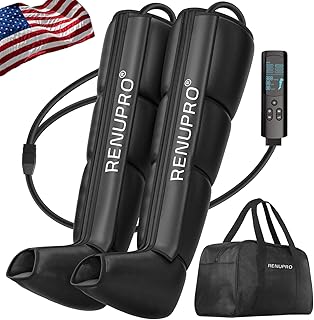 | Leg Compression Massager Air Boots Circulation | Set-and-Forget Nightly Circulation | 8.7/10 | Check price → |
 | FIT KING Air Compression Recovery System | Recognised Brand, Full Leg | 8.2/10 | Check price → |
 | Leg Compression Massager Circulation Pain Relief | Most Zones and Levels | 8.9/10 | Check price → |
Scroll sideways on small screens to see every column.
Sequential Leg Compression Massager Circulation: Best Overall for Adjustable Pressure
QUINEAR Leg Recovery Compression System Athlete: Best for Soreness After Hard Sessions
Leg Compression Massager Air Boots Circulation: Best for a Simple Nightly Routine
FIT KING Air Compression Recovery System: Best Known Brand for Full-Leg Sessions
Leg Compression Massager Circulation Pain Relief: Best Spec Sheet for Zone Control
Buying Guide: Zones, Pressure Levels, Sizing and Routine
Everything that decides whether a recovery boot earns its floor space comes down to four things. Here's what to look at, and where each pick lands.
How much does zone count actually matter?
More zones means the boot can squeeze sections of your leg one after another instead of inflating as a single unit. This lineup spans a simple full-leg wrap at one end and 5 zones with 10 air chambers at the other in the 10-chamber model.
Sequential inflation is the clinical idea behind intermittent pneumatic compression, a technique hospitals use to support venous return. The National Heart, Lung, and Blood Institute notes that leg muscles and vein valves do a lot of the work moving blood back up the body, which is part of why external pressure helps heavy legs feel lighter.
For home use, 3 to 5 zones is plenty. You'll notice the difference between segmented and single-chamber boots more than you'll notice the difference between five zones and six.
How many pressure levels do you need?
Twelve levels is more than most home athletes will ever use deliberately, but having a low setting matters just as much as a high one. These picks run from 9 levels on the Sequential to 12 on the five-zone boot, and the difference between setting 2 and setting 10 is the difference between a gentle flush and something you'd tap out of.
Think of it this way: a light session on a rest day should feel almost boring. If your only options are strong and stronger, you'll use the boot less often than you meant to.
Why sizing breaks more purchases than specs do
Every pick on this list comes in Medium, and that's the single biggest return driver in the category. Air boots only work when the sleeve seals against your leg, so a loose boot never builds pressure and a tight one pinches behind the knee.
Measure your calf and your thigh before you order. If you're between sizes, size up and run a lower pressure level rather than squeezing into a boot that can't seal properly.
What does a realistic weekly routine look like?
Most buyers settle into 15 to 30 minute sessions, three to five times a week, usually in the evening. The Sequential pick covers that window with 3 timers, and the simpler Air Boots Circulation model is easy enough to run every night without thinking about it.
If you're also building out a home setup with free weights, a sensible pair of dumbbells that fit a small space will do more for your recovery than any boot will , and that's worth remembering before you spend anything.
Who Should NOT Buy Best Recovery Compression Devices for Home Athletes
Recovery boots are the wrong purchase for three kinds of buyers. Here's who they are, and what to look at instead.
You Need to Treat an Injury, Not Recover From Training
Air compression boots are a recovery tool, not a treatment. They move fluid and ease tight, heavy muscles after effort. They don't fix a torn calf, a stress fracture, or a swollen joint.
If you've got sharp, localized pain that's still there two days later, a boot will just delay you seeing someone qualified. Get it assessed first.
You Want Deep-Tissue Pressure, Not Circulatory Pressure
Compression boots work with broad, wrapping air pressure across a whole limb. If what you actually want is focused pressure into a specific knot or trigger point, a massage gun or a foam roller targets that better.
If you're dealing with chronic problems rather than post-workout heaviness, the workout problems section covers the kinds of issues that need a different approach entirely.
You Can't Commit to 15 Minutes, Three Times a Week
This is the honest one. A recovery boot only works if you actually use it. Buyers who let it sit in a closet after month one get nothing from it, and no amount of zone count changes that.
If your evenings are already tight and you can't carve out a reliable 15 to 20 minute block, spend the money elsewhere. The simpler one-button model has the best shot of surviving a busy schedule, but the discipline is still on you.
Final Verdict
The Sequential Leg Compression Massager Circulation is the pick if you want the best balance of pressure range, timer flexibility and buyer track record in one Medium boot. Nine levels, six modes and three timers means it adapts to a hard training week and a light one.
Want the most granular zone control? Get the five-zone, 10-chamber model, as long as you're comfortable that its review base is still growing.
Need something you'll genuinely use every night without adjusting anything? The Air Boots Circulation pick earns its place on simplicity alone. And if brand familiarity is what helps you pull the trigger, the FIT KING full-leg system is the recognised name in this group.
Before any of that, check the Who Should NOT Buy section above. If you recognized yourself in any of those three, this category isn't the right buy for you yet.
FAQ
What's the best Recovery Compression Devices for Home Athletes overall?
The Sequential Leg Compression Massager Circulation takes the top spot. It combines 9 intensity levels, 6 modes and 3 timers with a 4.6/5 reported rating, which is the most complete package here for a home athlete with a changing training load.
Do compression boots actually help with recovery?
Air compression boots apply sequential pressure to help move fluid and reduce that heavy, swollen feeling after hard training. Peer-reviewed work on intermittent pneumatic compression supports improved circulation and reduced soreness perception. They help you feel better, not perform better overnight.
How long should I use recovery boots each session?
Most home athletes run 15 to 30 minutes per session, three to five times a week. The Sequential pick's 3 timers cover that range exactly. Longer isn't better, and if a lower-pressure session already feels good, stick with it.
Are compression boots safe to use every day?
Daily use at moderate pressure is fine for most healthy adults. Get medical clearance first if you have a history of blood clots, deep vein thrombosis, active infection, or heart failure, because external leg compression isn't appropriate for every condition. Stop and speak to a doctor if a session ever causes pain.
What sizes do these recovery boots come in?
Every model in this lineup comes in Medium only, which fits most average adult legs. Measure your calf and thigh circumference before ordering, because a boot that doesn't seal properly won't build pressure and won't do much for you.
Are expensive compression boots worth it over cheap ones?
The difference shows up in control range and zone count, not in whether the boot works at all. A budget model with a few fixed settings will still move fluid. The more adjustable pick earns its place if you want to tune each session differently.
For more on how we handle testing, valuations and partner links, see how we work and our privacy terms.

Similar Posts