Best Cold Therapy Sleeves for Post-Workout Recovery
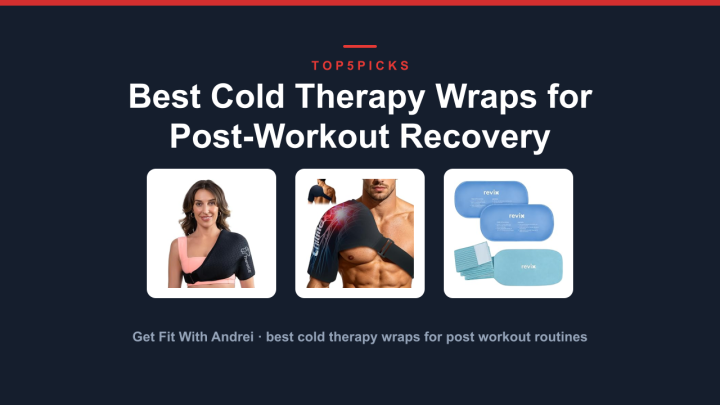
The best cold therapy sleeves for post workout use come down to one model: the TheraICE Shoulder Ice Wrap PRO. It's cut to follow the rotator cuff and shoulder cap rather than sitting on top of it like a flat rectangle, and its gel insert stays mouldable straight out of the freezer. If your shoulder is the joint that complains after pressing days, this is the one.
Want a knee sleeve instead? The TheraICE Knee Ice Wrap gets you there, as long as you're fine with a pull-on fit in a single Large size rather than something adjustable.
As an Amazon Associate, I earn from qualifying purchases.
Below is what specs and owner reports actually show you before you spend anything, including the buyers who should skip this whole category and reach for a different tool entirely.
One honest note up front: everything here comes from current Amazon listings, manufacturer specifications and each product's aggregated owner track record, not from hands-on lab testing by our editorial team.
Quick Answer: The Best Cold Therapy Sleeves for Post Workout Use
The TheraICE Shoulder Ice Wrap PRO takes the top spot because of its rotator cuff shaped cut and freezer-ready gel insert.
- TheraICE Shoulder Ice Wrap PRO (Best overall): contoured shoulder wrap that stays put while you're upright.
- TheraICE Knee Ice Wrap (Best for meniscus and post-run swelling): Large sizing and the strongest rating here.
- TheraICE Elbow Ice Wrap (Best for tennis and golfer's elbow): compact sleeve for the smallest joint in this group.
- Shoulder Ice Wrap Rotator Cuff Cold (Best budget shoulder option): simpler build at a lower entry point.
- TheraICE Knee Ice Wrap (Best for everyday knee ache): the most reviewed knee sleeve of the five.
Thinking about an ice machine or a heat pack instead? Jump to Who Should NOT Buy below before you spend anything.
Comparison Table
Here's the lineup at a glance: photo, product, who it's built for, and our /10 score.
| Photo | Product | Best for | Score | Buy |
|---|---|---|---|---|
 | TheraICE Shoulder Ice Wrap PRO | Rotator cuff and shoulder icing | 9.2/10 | Check price → |
 | TheraICE Knee Ice Wrap | Meniscus and post-run knees | 9.0/10 | Check price → |
 | TheraICE Elbow Ice Wrap | Tennis and golfer’s elbow | 8.7/10 | Check price → |
 | Shoulder Ice Wrap Rotator Cuff Cold | Budget shoulder cold therapy | 8.1/10 | Check price → |
 | TheraICE Knee Ice Wrap | Everyday knee ache relief | 8.4/10 | Check price → |
Scroll sideways on small screens to see every column.
TheraICE Shoulder Ice Wrap PRO: Best Overall for Shoulder and Rotator Cuff Icing
TheraICE Knee Ice Wrap: Best for Meniscus Pain and Post-Run Swelling
TheraICE Elbow Ice Wrap: Best for Tennis Elbow and Golfer’s Elbow
Shoulder Ice Wrap Rotator Cuff Cold: Best Budget Shoulder Option
TheraICE Knee Ice Wrap: Best for Everyday Knee Ache
Buying Guide: Joint Shape, Cold Retention, Fit and Refreeze Time
Cold therapy sleeves are a compression garment with a freezer gel insert built in. They chill a joint and squeeze it slightly at the same time, which is the combination clinicians usually want in the first 48 hours after a hard session. Here's what actually separates the five picks above.
Does the sleeve match your joint shape?
This is the factor that decides whether a wrap works or slides off. A flat rectangle strapped anywhere will drift, and a drifted pack cools skin over bone rather than the tissue you care about.
- Shoulder: contours matter most here. The TheraICE Shoulder Ice Wrap PRO is cut to follow the deltoid; a generic pack will not.
- Knee: pull-on sleeves work better than straps because the joint bends constantly. The Large TheraICE knee sleeve is built around that.
- Elbow: narrower is better. A bulky wrap on a thin joint simply rolls.
How long does the gel actually stay cold?
Freezer gel inserts typically hold usable cold for around 15 to 20 minutes per wear, which lines up with the standard guidance of applying cold in short bursts rather than one long sit. That is also why refreeze time matters as much as initial cold: these inserts need roughly two hours back in the freezer to fully recharge.
If you ice twice a day, one insert is workable but tight. Two inserts, or two sleeves, removes the waiting entirely. Some owners keep a spare pack rotating in the freezer for exactly that reason.
Fit and compression: snug, not tight
A sleeve should feel firm and even, never pinching. Two things reliably go wrong: a loose sleeve loses skin contact and cools almost nothing, and an over-tight one restricts circulation, which is the opposite of what you want after training.
Check the sizing chart rather than assuming. The knee models here are the tightest constraint, with the Large version suiting average to broader legs and the standard version running snug on muscular thighs. The elbow sleeve is unisex and slim, which suits most arm sizes.
What else do you need in the kit?
A few small additions make cold therapy far easier to actually stick with:
- A spare gel insert, so one is always frozen while you wear the other.
- A thin cloth layer if your skin is sensitive, since direct prolonged contact can irritate.
- A freezer spot you can dedicate, because a full freezer cools inserts faster than a crowded one.
- Something to do for 15 minutes, because the biggest failure mode is getting bored and taking it off early.
If you're building out a home setup, our notes on kitting out a compact training space cover the storage side of that. And if you're dealing with recurring niggles rather than one-off soreness, the recurring training complaints people run into are worth a read before you buy anything else.
One more thing worth knowing: there is no single cold sleeve that fits every joint. Buying one shoulder wrap and expecting it to handle your knee is the most common mistake we see in buyer feedback. Match the sleeve to the joint, and accept that a two-sleeve kit is often the honest answer.
The FDA recognises cold therapy as a legitimate conservative treatment for musculoskeletal pain, and the agency's guidance on medical devices is where to check how such products are classified in the US.
Who Should NOT Buy Cold Therapy Sleeves for Post Workout Use
This category is the wrong purchase for a few kinds of buyers. Here's who they are, and what to look at instead.
You Need to Cool a Joint You Can't Reach With a Sleeve
Spine, neck, hip and deep back complaints are the big ones. No sleeve contours to a lumbar spine or a hip capsule, because those joints sit under layers of muscle and bone.
For those areas you want a large flat cold pack, a cold compression unit with a hose and bladder, or a wrapped ice bag. A sleeve will just bunch up and cool the wrong spot.
You Need Heat, Not Cold
If your goal is loosening stiff tissue before a session, or easing a chronic ache that feels better warm, cold therapy is the wrong tool. A heat wrap, a warm shower or a heating pad is what you want.
Cold is for fresh inflammation, swelling and acute post-session soreness. Mixing the two up is one of the most common self-treatment mistakes.
You Want a Brace That Supports the Joint
Cold sleeves add mild compression, not structural support. If you need a hinged knee brace, a counterforce elbow strap or a shoulder stabiliser for sport, a cold sleeve will not do that job.
The elbow wrap here is a clear example: it delivers cold and squeeze, but it is not a tendon offloading strap. Buy the support device your clinician recommended, and use a cold sleeve alongside it.
Final Verdict
The TheraICE Shoulder Ice Wrap PRO stays the top pick. It is the only wrap here cut specifically for the rotator cuff and shoulder cap, and it holds position while you're upright instead of sliding off the moment you stand up.
Want a knee sleeve instead? Get the Large TheraICE Knee Ice Wrap, as long as the single Large size suits your leg. It carries the best owner rating here at 4.5 out of 5.
Icing an elbow? The slim unisex elbow sleeve handles the smallest joint in this group well, provided you understand it's a cold and compression tool rather than a tendon strap.
Need to spend less on shoulder cold therapy? The budget shoulder brace gets you there for less, accepting a bit more fiddling with the straps. And if you'd rather have the knee model with the biggest track record behind it, the well-established knee sleeve is the safe call.
Before you order anything, go back up and read the Who Should NOT Buy section. If you're chasing heat, spinal relief or real joint support, none of these five are your answer.
FAQ
What's the best cold therapy sleeve for post workout use overall?
The TheraICE Shoulder Ice Wrap PRO. It's the only pick here contoured specifically for the rotator cuff and shoulder cap, and its gel insert stays mouldable straight from the freezer, which is what makes it actually conform to the joint.
How long should I leave a cold sleeve on after training?
Around 15 to 20 minutes per session is the usual guidance. That's roughly how long a freezer gel insert holds usable cold anyway, so the two limits line up neatly. Let the sleeve refreeze for about two hours before the next round.
Can I wear a cold therapy sleeve while moving around?
Yes, and that's their main advantage over a flat ice pack. The pull-on knee and shoulder sleeves here are designed to stay put during light walking and everyday movement. Skip anything strenuous though, since the garment is there to cool the joint, not to support it under load.
Do I need a different sleeve for each joint?
Practically, yes. A shoulder wrap won't wrap a knee and an elbow sleeve is far too small for a thigh. The five picks above cover shoulder, knee and elbow separately, so pick the shape that matches the joint that's bothering you.
Is compression actually important, or is cold enough on its own?
Compression is a real part of why sleeves work. It keeps the gel in contact with your skin across the whole joint, and that contact is what transfers the cold. A loose pack loses contact and cools almost nothing.
Should I ice before or after a workout?
After, for soreness and swelling. Cold narrows blood vessels, so it's not what you want immediately before hard training when you need blood flow and warmth in the tissue. If you're using it after a session, aim to get the sleeve on within the first hour or so.
If you have a diagnosed condition, a recent injury or reduced sensation in the area, talk to a clinician before self-treating, and check our medical information disclaimer for how this content is intended to be used. You can also read who writes and reviews this site, or get in touch via the contact page if something here needs clarifying.

Similar Posts