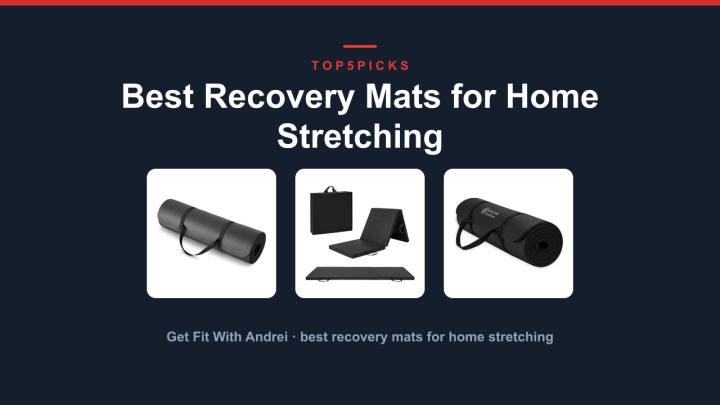
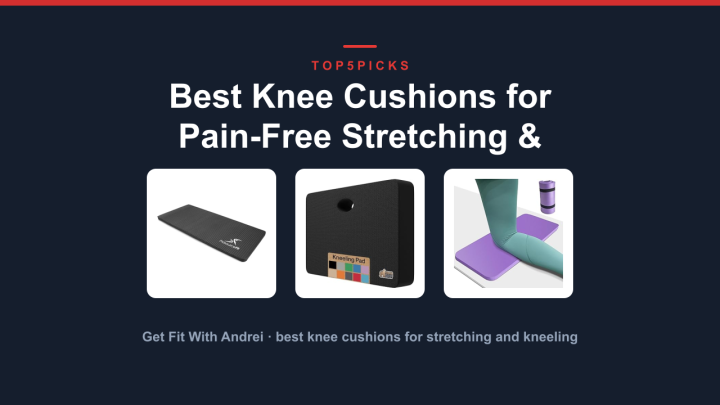
Best Portable Recovery Mats That Fit in Your Gym Bag
For most people, the best portable recovery mats for gym bags is the CAP Barbell All Purpose Folding Anti mat in its 2-inch build, the only pick here that hinge-folds to locker size while keeping a full 2 inches (50.8mm) of closed-cell foam under your spine. It suits lifters who stretch on a hard commercial gym floor and need real cushion, not a towel.
Want a full recovery corner at home instead? The HulkFit 4×8 gets you there, as long as you accept that a 32 square foot tumbling mat lives in your trunk or against a wall, never in a duffel.
As an Amazon Associate, I earn from qualifying purchases.
This guide covers the hinge stresses, foam densities and owner complaints that product listings bury. It also names the three buyer types who should skip this category entirely, and they get their own section at the end.
Everything below comes from current Amazon product data, manufacturer specs and aggregated owner reviews rather than hands-on lab testing. Here's how we're funded and why that doesn't affect the picks.
Quick Answer: The Best Portable Recovery Mats for Gym Bags
The CAP Barbell 2-inch folding mat wins because it folds to roughly half its length without giving up padding, and it holds a 4.7/5 owner rating.
- CAP Barbell All Purpose Folding Anti (Best overall for gym bags): Folds small, keeps 2 inches of foam, wipes clean fast.
- HulkFit 4×8 Gymnastics Mat 2 Inch (Best for home floor work): 32 square feet of 2-inch foam and the top owner score here.
- Readaeer Double Color Yoga Mat (Best for light travel): 6mm TPE, 72 inches long, rolls to bottle-ish size.
- 7-Fold Yoga Mat 70"x24 (Best folding middle ground): 1/2-inch cushion that stacks flat instead of curling.
- CAP Barbell All Purpose Folding Anti (Best for full rooms): 10 x 4 ft of floor coverage for a home gym setup.
Thinking about training outdoors or using a gym that already supplies mats? Jump to Who Should NOT Buy below before you spend anything.
Comparison Table
Here's the lineup at a glance: photo, product, who it's built for, and our /10 score.
| Photo | Product | Best for | Score | Buy |
|---|---|---|---|---|
 | CAP Barbell All Purpose Folding Anti | Fits a gym bag, 2-inch foam | 9.1/10 | Check price → |
 | HulkFit 4×8 Gymnastics Mat 2 Inch | Home tumbling and floor work | 8.7/10 | Check price → |
 | Readaeer Double Color Yoga Mat | Lightest option for travel | 8.3/10 | Check price → |
 | 7-Fold Yoga Mat 70"x24 | Folds flat, extra cushion | 8.0/10 | Check price → |
 | CAP Barbell All Purpose Folding Anti | Full-room home gym floor | 7.8/10 | Check price → |
Scroll sideways on small screens to see every column.
CAP Barbell All Purpose Folding Anti:
HulkFit 4×8 Gymnastics Mat 2 Inch:
Readaeer Double Color Yoga Mat:
7-Fold Yoga Mat 70"x24: Best Folding Middle Ground for Tight Spaces
CAP Barbell All Purpose Folding Anti: Best Full-Room Floor Coverage
Buying Guide: Cushion, Folded Size, Foam Type and Grip
The five picks here span 6mm to 2 inches of foam and 4 square feet to 40 square feet of coverage, so the buying decision really comes down to four things.
How Thick Does a Recovery Mat Need to Be for Hard Gym Floors?
Six millimetres is a studio thickness, not a recovery thickness. It's fine over sprung wood or rubber gym flooring, where the substrate already absorbs impact.
Once you're on bare concrete, tile or a garage slab, you want at least 0.5 inches, and 2 inches if your knees are part of the conversation. That 2-inch figure is where closed-cell vinyl mats stop feeling like a yoga accessory and start working like a landing zone.
Does Folded Size Actually Matter in a Gym Bag?
Yes, and more than thickness for most people. A rolled 6mm mat like the Readaeer packs to a slim cylinder, which slides into a side pocket.
A folding mat trades a little extra bulk for a shape that stacks flat against your gear instead of bulging on top of it. If your bag is already tight because of the weights you carry, folding wins over rolling nearly every time.
Foam Type and Surface Grip: Vinyl, TPE and Anti-Tear Finishes
Closed-cell PVC and anti-tear vinyl resist sweat and wipe clean with a damp cloth, which is why the two CAP Barbell mats use it. TPE, the foam in the Readaeer, is lighter and latex-free but softens and tears more readily.
Grip comes from the top surface, not the thickness. Textured vinyl on the folding mats holds bare feet and shoes well; smooth PVC becomes slick once sweat pools on it. Wipe any mat dry between sets and you'll keep most of the traction you paid for.
Rubber floors and mats also matter for fall prevention in older users, and the Centers for Disease Control and Prevention tracks home hazard reduction as a core part of that work. On the commercial side, the Occupational Safety and Health Administration publishes walking-working surface guidance that applies to any facility training floor.
Which Extras Are Worth Paying For?
Carry straps and storage hooks are genuinely useful because a folded panel mat is awkward to carry by hand. Colour options are cosmetic, but thickness options are not: always pick the thicker build if the mat will live on concrete.
Anything claiming to be a "recovery system" in the title is marketing. You're buying foam density, a surface that grips, and a fold pattern that survives daily handling.
To see how these factors play out on real picks, compare the CAP Barbell All Purpose Folding Anti, HulkFit 4×8 Gymnastics Mat 2 Inch and the Readaeer Double Color Yoga Mat reviewed above.
Who Should NOT Buy Best Portable Recovery Mats for Gym Bags
This category is the wrong purchase for three kinds of buyers. Here's who they are, and what to look at instead.
You Need to Cover an Entire Training Room
Forty square feet is the ceiling here, and that's one corner, not a full garage gym. If you're deadlifting on a concrete slab with a rack, a platform, and a sled lane, you need interlocking rubber tiles or rolled rubber flooring, which handle dropped loads that no folding mat will survive.
You Train Only in Commercial Gyms With Supplied Flooring
Most commercial facilities already lay rubber or sprung flooring in the stretching and functional zones. In that setting a portable mat is a hygiene layer, not a cushion, and a thin roll-up mat does the job without adding three pounds to your bag.
Skip the heavy panel mats entirely if this is your situation. You'd be buying padding you never get to use.
You Want Something You Can Hose Down and Leave Outside
Vinyl and TPE both degrade under sustained UV exposure and standing water. If you train on a driveway or patio and want to leave the mat out, look at rubber-backed outdoor mats instead.
Folding foam mats also trap grit in the seams, which turns into an abrasive paste that shortens the foam's life. Indoor storage is not optional with any of the five picks above.
Final Verdict
The CAP Barbell 2-inch folding mat is the one to buy for a gym bag. It's the only pick that keeps full 2-inch padding while folding to roughly half its length, and the 4.7/5 owner score is the highest in the group.
Want a full recovery zone at home instead? Get the HulkFit 4×8. It gives you 32 square feet of 2-inch foam and the best owner rating on this list, as long as the mat gets a permanent home on your floor.
Need something you can fly with or drop in a backpack? The Readaeer TPE mat rolls slim and still runs 72 inches long, which is more length than either folding option.
And if your knees want cushion but your closet is full, the 7-Fold mat splits the difference at half an inch. If you fall into any of the three groups in the section above, though, none of these is your answer and that's fine.
FAQ
What's the best Portable Recovery Mats for Gym Bags overall?
The CAP Barbell 2-inch folding mat. It folds to roughly half its length, keeps a genuine 2 inches (50.8mm) of closed-cell foam, and holds a 4.7/5 owner rating, which no other pick here matches on portability and cushion combined.
How thick should a recovery mat be for a gym bag?
Aim for 0.5 to 2 inches if your gym floor is hard. A 6mm mat folds or rolls smallest, but it's a studio layer, not a cushion, and it won't help much on tile or concrete.
Can I wash a folding foam mat?
Wipe it, don't soak it. Mild soap and a damp cloth handle sweat and chalk, but submerging the foam traps water in the cell structure and breaks down the surface. Let it air dry fully unfolded before you store it.
Do folding mats eventually crack at the creases?
Every folding mat flexes at the same seams, and that's where wear shows first. In our review analysis, owners who fold only along the stitched or moulded seams reported far fewer issues than those who folded wherever was convenient.
Is a 4×8 or 10×4 mat too big for a small apartment?
The 4×8 covers 32 square feet and the 10×4 covers 40, so both need real floor space. In a tight room, a folding 2-inch mat takes a fraction of that footprint and still gives you the padding, which is usually the better trade. Anyone stuck choosing between gear for a tight space may find practical fixes for small setups useful before buying.
Are these mats worth it over just using a towel?
Yes, if you stretch or do floor work more than twice a week. A towel gives you zero impact absorption and bunches up under load, while even a 6mm mat adds a consistent, grippy surface that stays put through a full session.
If you want to see how we source and score products, the folks behind this site explain it plainly, and you can reach the team with corrections. We also publish how reader data is handled and the rules for using this site.

Similar Posts