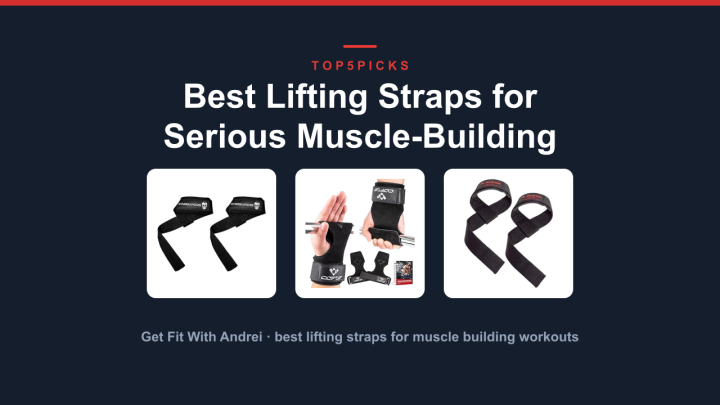
Best Padded Wrist Straps for Heavy Pulling Exercises
Looking for the best padded wrist straps for heavy pulling exercises? The Gymreapers 18-inch cotton pair takes the top spot, and the reason is simple: its dense neoprene cuff spreads load across the whole wrist instead of digging into one spot. It suits anyone pulling heavy deadlifts, RDLs and rack pulls who wants grip to stop being the limiting factor.
Want a longer strap that wraps thick bars more times? The Harbinger NeoTek gets you there at 21.5 inches, as long as you don't mind trading that dense neoprene feel for a softer cushion.
As an Amazon Associate, I earn from qualifying purchases.
This guide covers the things most roundups skip: strap length versus wrist size, cotton versus leather, and the exact buyers who shouldn't spend money here at all. Those buyers get their own section below.
Everything here comes from current Amazon product data, manufacturer specs and each product's owner track record. We haven't physically tested these straps, and we won't pretend otherwise.
Quick Answer: The Best Padded Wrist Straps for Heavy Pulling Exercises
The Gymreapers 18-inch cotton and neoprene pair is our overall winner for heavy pulling.
- Gymreapers Lifting Wrist Straps Weightlifting (Best for heavy pulls): Dense neoprene pad with 18-inch cotton that locks onto the bar.
- Harbinger Padded Cotton Lifting Straps NeoTek (Best for thick bars): 21.5-inch length gives an extra wrap on fat bars.
- Gymreapers Lifting Wrist Straps Weightlifting (Best proven track record): Same build, years of owner feedback behind it.
- Fitgriff® Lifting Wrist Straps Weightlifting (Best for narrower wrists): Unisex padded cotton that tightens down properly.
- Weight Lifting Wrist Strap (Best leather option): Double-layer leather for lifters who dislike cotton stretch.
Thinking about training without straps, or building your grip first? Jump to Who Should NOT Buy below before you spend anything.
Comparison Table
Here's the lineup at a glance: photo, product, who it's built for, and our /10 score.
| Photo | Product | Best for | Score | Buy |
|---|---|---|---|---|
 | Gymreapers Lifting Wrist Straps Weightlifting | Heavy deadlifts and rack pulls | 9.3/10 | Check price → |
 | Harbinger Padded Cotton Lifting Straps NeoTek | Longer wrap for thick bars | 9.0/10 | Check price → |
 | Gymreapers Lifting Wrist Straps Weightlifting | Everyday gym pulling volume | 8.7/10 | Check price → |
 | Fitgriff® Lifting Wrist Straps Weightlifting | Narrower wrists, padded comfort | 8.4/10 | Check price → |
 | Weight Lifting Wrist Strap | Leather-grip traditionalists | 7.8/10 | Check price → |
Scroll sideways on small screens to see every column.
Gymreapers Lifting Wrist Straps Weightlifting: Best Overall for Heavy Pullers
Harbinger Padded Cotton Lifting Straps NeoTek: Best for Thick Bars
Gymreapers Lifting Wrist Straps Weightlifting: Best Long-Term Track Record
Fitgriff® Lifting Wrist Straps Weightlifting: Best for Narrower Wrists
Weight Lifting Wrist Strap: Best Leather Option
Buying Guide: Strap Length, Padding Material, Load Rating and Fit
Grip support is the whole point of a pulling strap, but four specs decide whether a pair actually works for you.
Does strap length really matter for heavy pulling?
Yes, and it's the most common reason people buy the wrong pair. Length determines how many times the strap wraps the bar, and each wrap adds friction.
- Standard barbell (28mm): 18 inches gives two comfortable wraps.
- Thick bar or axle: you need the 21.5-inch length, like the Harbinger NeoTek.
- Squat or trap bar handles: shorter straps are fine and less fiddly.
A short strap on a fat bar means one wrap, which means the bar can roll. Measure your bar before you order.
Padding material: neoprene, cotton or leather?
The padding is what protects your wrist skin from the webbing, and the material changes how the strap feels over a session.
Neoprene is a synthetic rubber foam that holds its shape and spreads pressure evenly. It's the densest option in this lineup and what the Gymreapers pair uses. Cotton padding breathes better and breaks in faster, but it can flatten over time.
Leather is the most durable against stretch but offers the least cushioning.
If your wrists bruise easily, prioritise padding density over strap material.
How much load can lifting straps actually take?
More than most home lifters will ever pull, provided the stitching holds. Cotton webbing at this thickness is generally rated far beyond the 300 to 500lb range typical recreational lifters work in.
The failure point isn't the strap breaking. It's the loop stitching loosening, or the cotton stretching so the wrap goes slack mid-set. Verified buyer feedback on the top picks describes multi-year use before stitching wear appears.
That said, straps are a grip aid, not a lifting belt. They don't protect your spine, and they don't make a bad pull safe. If you're managing a back issue, a qualified coach or physio is the right person to ask, not a product listing.
Fit, width and washing
Width plays a bigger role than most people expect. A 1.5-inch wide strap like the Harbinger sits flatter on the wrist than a narrow webbing strap, which tends to bunch and dig in.
For wrist size, unisex cotton straps tighten down enough for most people, but narrower wrists do better with a specifically sized design such as the Fitgriff padded pair.
On care: cotton straps should be washed cold and air dried. Chalk and sweat build up in the webbing, and skipping that wash shortens the life of the strap noticeably. If you're putting together a small setup anyway, our notes on equipping a compact training space cover what else is worth owning.
Who Should NOT Buy Best Padded Wrist Straps for Heavy Pulling Exercises
Padded wrist straps are the wrong purchase for a few kinds of buyers. Here's who they are, and what to look at instead.
You need to build your own grip strength
This is the biggest group. If your goal is a stronger grip, straps actively work against you. They take the load off your forearms and hands, which is exactly the tissue you're trying to train.
Lifters in this position do better with chalk, a thick-bar program, or dedicated grip work like farmer's carries and plate pinches. Save the straps for the top sets where grip genuinely fails first.
You're dealing with wrist pain or an injury
A padded strap protects against skin irritation and pressure, not joint problems. If pulling aggravates your wrist, adding padding won't fix the cause.
Get that assessed properly before you buy anything. Straps can mask a problem while it gets worse. You'll find general context in our notes on common training issues, but a clinician is the right resource for an actual diagnosis.
You only pull light weights
If your working sets sit well below your grip's limit, a strap adds setup time for nothing. Chalk, a decent knurled bar, or a hook grip will do the job with no extra gear in your bag.
Straps earn their place when your back and legs are ready to move more weight than your hands can hold. Below that point, you're just adding a step to every set.
Final Verdict
The Gymreapers 18-inch padded pair remains the pick to beat. Dense neoprene padding plus 18 inches of cotton gives you a secure wrap on a standard bar without sacrificing wrist comfort.
Want a longer wrap for thick bars? Get the Harbinger NeoTek. That extra 3.5 inches is the difference between one wrap and two on a fat axle.
Need proof of long-term durability before buying? The older Gymreapers listing has years of owner history behind the same build. And if you have narrower wrists, the Fitgriff unisex pair tightens down properly.
If any of the groups in the section above describes you, skip all of this and spend the money on chalk instead.
FAQ
What's the best Padded Wrist Straps for Heavy Pulling Exercises overall?
The Gymreapers 18-inch cotton and neoprene pair. It combines dense wrist padding with enough strap length to wrap a standard barbell twice, and it holds the highest reported rating in this lineup at 4.7 out of 5.
How long should lifting straps be?
Eighteen inches works for standard 28mm barbells. Go to 21.5 inches if you train on thick bars or axles, because the extra length buys an additional wrap and more friction against the bar.
Do padded wrist straps help with deadlifts?
They help by removing grip as the limiting factor, not by making you stronger. Once your hands stop failing before your back does, you can push heavier pulls and more volume on rack pulls, shrugs and rows.
Are cotton or leather lifting straps better?
Cotton is more comfortable and cheaper, but it stretches when sweaty. Leather resists stretch and lasts longer, at the cost of a stiff break-in period and less wrist cushioning.
Can I wash my lifting straps?
Yes. Cotton straps should be washed cold and air dried, and leather should be wiped and conditioned instead of soaked. Never put either in a hot dryer cycle.
Do lifting straps count as cheating?
No. They're a standard tool in powerlifting and bodybuilding, and plenty of strong lifters use them on heavy pulling sets. Just don't use them on every set if grip strength is something you're trying to build.

Similar Posts