Best Mini Food Processors for Effortless Meal Prep
The best best mini food processors for meal prep is the Cuisinart Mini Food Processor (3-cup), and the reason is simple: it's the only pick here with a reversible blade, so one side chops and the other grinds. That means garlic, herbs, onions and small sauces all come out of the same compact machine.
Want faster, more consistent chopping in a slightly bigger bowl instead? The Hamilton Beach 3 Cup Electric Vegetable gets you there, as long as you don't mind a lighter plastic build and a more basic blade setup.
As an Amazon Associate, I earn from qualifying purchases.
Below we walk through capacity, blade geometry and the cleanup reality that decides whether you actually keep using one of these. If you're chopping for five people, making nut butter by the jar, or want a machine that kneads dough, this category is the wrong buy.
One honesty note before we start: everything here comes from current product data, manufacturer specs and each machine's owner track record across buyer reviews, not from hands-on lab testing.
Quick Answer: The Best Mini Food Processors for Meal Prep
The Cuisinart Mini Food Processor leads this list because a reversible blade gives you two functions in one 3-cup body.
- Cuisinart Mini Food Processor (Best overall): Reversible blade chops and grinds in one 3-cup bowl.
- Hamilton Beach 3 Cup Electric Vegetable (Best for chopping): Even dicing on onions and peppers with almost no learning curve.
- Cuisinart Mini-Prep Plus Food Processor (Best for batch size): 4-cup bowl and two speeds without a big footprint.
- Cuisinart Core Custom 4-Cup Mini Chopper (Best hands-off option): Auto-reversing blade chops then grinds on its own.
- BLACK+DECKER 1.5-Cup Electric Food Chopper (Best budget pick): 150W one-touch chopper that handles a single small job.
Thinking about a full-size machine or a knife-and-board setup instead? Jump to Who Should NOT Buy below before you spend anything.
Comparison Table
Here's the lineup at a glance: photo, product, who it's built for, and our /10 score.
| Photo | Product | Best for | Score | Buy |
|---|---|---|---|---|
 | Cuisinart Mini Food Processor | Everyday small-batch prepping | 8.6/10 | Check price → |
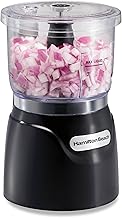 | Hamilton Beach 3 Cup Electric Vegetable | Fast, even vegetable chopping | 8.4/10 | Check price → |
 | Cuisinart Mini-Prep Plus Food Processor | Bigger batches, small footprint | 8.2/10 | Check price → |
 | Cuisinart Core Custom 4-Cup Mini Chopper | Hands-off chop and grind | 7.9/10 | Check price → |
 | BLACK+DECKER 1.5-Cup Electric Food Chopper | Budget garlic and herb jobs | 8.0/10 | Check price → |
Scroll sideways on small screens to see every column.
Cuisinart Mini Food Processor: Best Overall for Everyday Small-Batch Prep
Hamilton Beach 3 Cup Electric Vegetable: Best for Fast, Even Vegetable Chopping
Cuisinart Mini-Prep Plus Food Processor: Best for Bigger Batches Without the Bulk
Cuisinart Core Custom 4-Cup Mini Chopper: Best Hands-Off Chop and Grind
BLACK+DECKER 1.5-Cup Electric Food Chopper: Best Budget Pick for Tiny Jobs
Buying Guide: Capacity, Blade Design, Power and Cleanup
Four things decide whether a mini food processor becomes a daily tool or a cabinet ornament. Here's what actually matters.
How much capacity do you actually need?
A mini food processor is a small electric appliance with a 1.5 to 4-cup work bowl that chops, minces and sometimes grinds in batches. Capacity is the first filter, because bowl size sets how many portions you can prep before you stop and empty it.
The five picks here span 1.5 cups to 4 cups, and that range changes everything about how you cook. A 1.5-cup chopper like the BLACK+DECKER covers garlic, herbs and one onion at a time. The 3-cup machines handle roughly 2 cups of diced vegetables per run, which suits one or two people.
Step up to 4 cups and you get around 3 cups of working volume, enough for three or four meal-prep portions. If you're building out a kitchen or home setup where space is tight, the same space math applies to fitting gear into a tight corner: measure the counter first.
Blade design: reversible, single or auto-reversing?
Blade geometry decides whether one machine can do two jobs. A reversible blade chops on one face and grinds on the other, which is why the Cuisinart Mini Food Processor leads this list.
The Hamilton Beach 3 Cup takes a different route: one well-shaped stainless blade and a simple pulse control, optimised for even vegetable dice rather than grinding. That's a deliberate trade, not a flaw.
Then there's the auto-reversing approach on the Core Custom 4-Cup, where the motor changes blade direction on its own. It's convenient, but the 4 out of 5 owner rating suggests it's less foolproof than a manual flip. Stainless steel is the standard blade material across all five picks.
Power, speeds and what these motors can't do
Motor output and speed settings set the ceiling on what you can process. A 150W motor handles garlic, herbs and breadcrumbs comfortably, but it will bog down on a block of hard cheese.
Two speed settings, as on the Mini-Prep Plus, let you pulse gently for salsa and run continuously for a rough chop. Single-speed models push you toward short pulses instead, which works fine once you get the rhythm.
What none of these machines do is knead dough or make a full jar of nut butter. Mini processors are built for small, quick jobs, and treating them as a full-size machine is how motors burn out. Buyers who want that capability are shopping in the wrong category.
Cleaning, storage and the daily-use reality
Cleanup decides long-term use more than any spec on the box. Every pick here has a dishwasher-safe bowl, lid and blade, and the 1.5-cup BLACK+DECKER wins purely because there's less of it to wash.
Counter footprint matters too. These units are roughly the size of a large coffee mug at the base, so they fit under upper cabinets and don't demand a dedicated appliance garage. If your training and nutrition routine already has a lot of moving parts, the notes on common training snags are a useful reminder that consistency beats complexity.
One habit worth adopting: rinse the bowl and blade immediately after use. Dried-on garlic and nut paste is the single biggest reason owners stop reaching for these machines.
Who Should NOT Buy Best Mini Food Processors for Meal Prep
This category is the wrong purchase for three kinds of buyers. Here's who they are, and what to look at instead.
You Need to Prep for Five or More People
A 3-cup bowl holds about 2 cups of chopped vegetables, which is two to three servings of prepped ingredients. Feeding a family of five means emptying and reloading three or four times per meal.
That's not a small inconvenience, it's the difference between using the machine and resenting it. If you prep in bulk on Sundays for the whole week, a full-size 11 to 14-cup food processor is the right tool, and these mini units become a secondary appliance for small jobs.
You Want to Knead Dough or Make Real Nut Butter
None of these motors will knead bread dough or turn a jar of almonds into smooth butter. The 150W to modest-watt motors here are rated for short, light-duty chopping, not sustained high-torque work.
Trying anyway is how people burn out motors within a year. Look at a heavy-duty full-size processor or a dedicated blender if those jobs matter, and keep a mini chopper for herbs and aromatics.
You'd Rather Have One Knife and a Cutting Board
Honestly, if you're chopping one onion and a clove of garlic, a sharp knife is faster than assembling, loading, running and washing a machine. These tools earn their place when you're prepping several ingredients in one session.
There's also the storage question. If your cabinets are already full, adding another single-purpose appliance may cost you more in frustration than it saves in prep time. You can read our commission details if you want to know exactly how this page is funded.
Final Verdict
The Cuisinart Mini Food Processor wins because one reversible blade covers chopping and grinding in a 3-cup bowl that fits on any counter. If you cook for one or two and want a machine you'll genuinely use several times a week, that's the pick.
Want faster, more consistent vegetable dice and the highest owner satisfaction in this roundup? Get the Hamilton Beach 3 Cup chopper, as long as you're fine with lighter plastic and no grinding side.
Need bigger batches without a bigger footprint? The Cuisinart Mini-Prep Plus gives you a 4-cup bowl and two speeds. And if you only ever mince garlic and herbs, the BLACK+DECKER 1.5-Cup chopper does it for the least money.
Before you buy anything, check the Who Should NOT Buy section above. Our editorial team's background and the general information caveats explain how these recommendations are put together, and how we handle your data when you browse.
FAQ
What's the best Mini Food Processors for Meal Prep overall?
The Cuisinart Mini Food Processor (3-cup) is our top pick, thanks to its reversible blade, compact footprint and 4.5 out of 5 reported rating. It chops and grinds in one bowl, which is the balance most small kitchens need.
How big should a mini food processor be for one person?
A 3-cup bowl is the sweet spot for one or two people, giving you roughly 2 cups of chopped vegetables per run. If you're only doing garlic and herbs, a 1.5-cup chopper is plenty.
Can a mini food processor handle nuts and hard cheese?
Yes, if it has a grinding blade or a reversible blade. The Cuisinart Mini Food Processor and the Core Custom 4-Cup are built for that. Very dense blocks will still stall a 150W motor, so cut them smaller first.
Is a mini food processor worth it if I already own a blender?
They do different jobs. A blender needs liquid to move ingredients, while a mini chopper handles dry ingredients like onions, nuts and breadcrumbs. Most owners keep both.
How do I stop the bowl from leaking when I puree?
Keep liquids below the maximum fill line and pulse rather than running continuously. Owner reports for the 3-cup models all point to overfilling as the main cause of seepage past the lid.
How should I clean and store one of these?
Rinse the bowl and blade right after use, then let the dishwasher handle the rest. Keep the motor base dry, especially on touchpad models, and store the blade in the bowl rather than loose in a drawer.

Similar Posts